Understanding criminal law can seem difficult because it involves legal rules, court procedures, evidence, and serious consequences. However, learning the basic concepts can make the subject much easier to understand.
Criminal law basics for beginners starts with understanding what makes an act a crime, how criminal cases begin, what prosecutors and defendants do, how evidence is considered, and what can happen after a conviction.
Criminal law deals with conduct that a government considers harmful or unlawful and that can result in criminal punishment. Depending on the legal system, crimes can range from minor offenses to serious crimes carrying substantial penalties.
This guide explains criminal law basics for beginners in simple language. It covers different types of crimes, criminal charges, arrests, evidence, defenses, trials, convictions, sentencing, and basic legal rights.
Criminal laws vary significantly between countries, states, provinces, and other jurisdictions. This article provides general educational information and is not legal advice for a specific criminal case.
What Is Criminal Law?
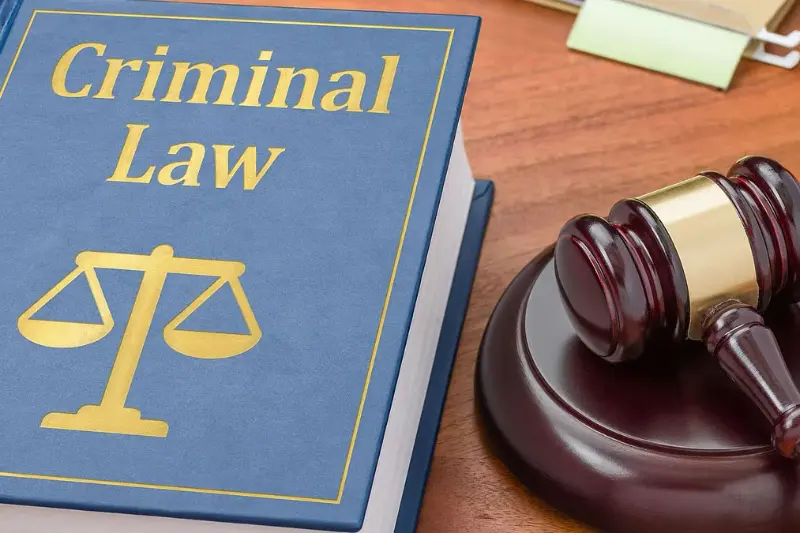
Criminal law is the area of law that defines certain conduct as criminal and establishes potential punishments for people who commit those offenses.
Learning criminal law basics for beginners begins with understanding the difference between criminal law and other areas of law.
Criminal cases are generally brought by the government against a person accused of committing a crime.
Examples of criminal offenses can include:
- Theft
- Fraud
- Assault
- Robbery
- Burglary
- Drug offenses
- Property crimes
- Certain traffic offenses
- Homicide
The exact definition and punishment for each offense depends on applicable law.
Why Does Criminal Law Exist?
Criminal law serves several purposes.
It can help:
- Protect people and property
- Maintain public order
- Discourage harmful conduct
- Punish unlawful behavior
- Hold offenders accountable
- Protect society
- Establish legal standards for conduct
Criminal law also provides procedures and protections for people accused of crimes.
Criminal Law vs. Civil Law
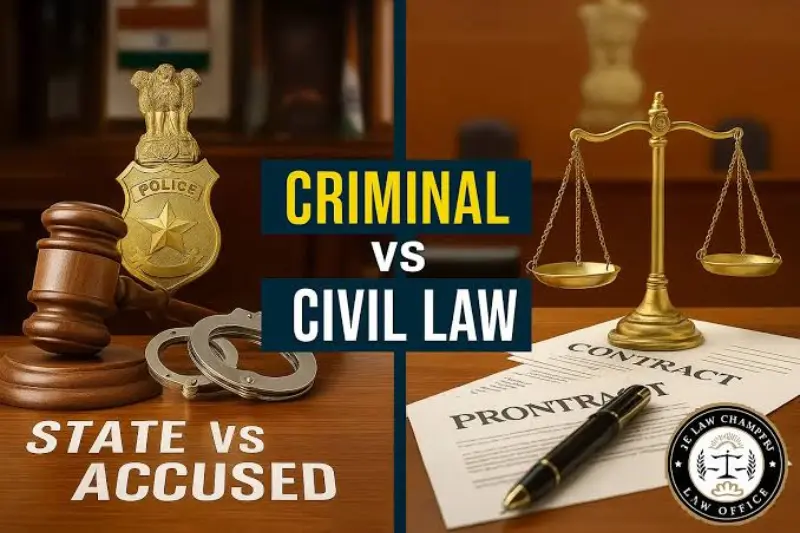
One of the most important parts of criminal law basics for beginners is understanding the difference between criminal and civil cases.
Criminal Cases
Criminal cases generally involve the government prosecuting a person for an alleged offense.
Possible consequences can include:
- Fines
- Probation
- Community-based penalties
- Imprisonment
- Other criminal sanctions
Civil Cases
Civil cases generally involve disputes between individuals, businesses, or organizations.
They may concern:
- Contracts
- Property
- Personal injury
- Business disputes
- Debt
- Family matters
Civil cases can result in financial compensation or other civil remedies rather than criminal punishment.
A single event can sometimes lead to both criminal and civil proceedings.
You may also like these posts:
How to File for Divorce: Step-by-Step Guide
Child Support Laws Explained: A Complete Guide
Marriage Legal Rights Guide: What Couples Should Know
Small Business Legal Rights: Complete Beginner’s Guide
What Makes an Act a Crime?
An act is criminal when it falls within the definition of an offense established by applicable law.
Criminal offenses generally require specific legal elements.
These may include:
- A prohibited act
- A required mental state
- Particular circumstances
- A required result
The exact elements depend on the offense.
What Is Actus Reus?
Actus reus is a Latin legal term commonly used to describe the physical act or conduct involved in a crime.
For example, an offense may require a person to:
- Take property
- Cause physical harm
- Enter a building
- Possess a prohibited item
The prosecution generally must establish the required physical elements of the offense.
What Is Mens Rea?
Mens rea is a Latin term commonly associated with the mental state required for a criminal offense.
Depending on the offense, the required mental state may involve:
- Intention
- Knowledge
- Recklessness
- Negligence
Not every crime requires the same mental state.
Understanding actus reus and mens rea is an important part of criminal law basics for beginners.
What Are the Main Types of Crimes?
Criminal offenses can be classified in different ways depending on the legal system.
Common categories include:
- Property crimes
- Violent crimes
- Financial crimes
- Drug offenses
- Public-order offenses
- Cybercrimes
- Traffic offenses
Some jurisdictions also classify offenses according to their seriousness.
What Are Property Crimes?
Property crimes generally involve unlawful interference with another person’s property.
Examples can include:
- Theft
- Burglary
- Vandalism
- Property damage
- Fraud
The exact definitions differ according to local law.
What Is Theft?
Theft generally involves unlawfully taking or exercising control over another person’s property with the required criminal intent.
The legal requirements vary by jurisdiction.
Factors such as the value and type of property can sometimes affect the seriousness of the offense.
What Is Burglary?
Burglary generally involves unlawful entry into a building or other structure with the required criminal intent.
Contrary to a common misconception, burglary does not necessarily require a person to steal something.
The precise legal definition depends on the jurisdiction.
What Are Violent Crimes?
Violent crimes generally involve physical force, threatened force, or serious harm against another person.
Examples can include:
- Assault
- Robbery
- Certain forms of sexual assault
- Homicide
- Kidnapping
The legal definitions and penalties vary significantly.
What Is Assault?
Assault laws vary between jurisdictions.
Depending on the legal system, assault may involve intentionally causing physical harm, attempting to cause harm, or placing another person in fear of imminent unlawful harm.
Because definitions vary, the exact local law should be checked when discussing a specific incident.
What Is Robbery?
Robbery generally involves taking property from another person through force, violence, or threats.
Robbery differs from ordinary theft because the use or threat of force is generally an important element.
What Is Homicide?
Homicide generally refers to one person causing the death of another.
Not every homicide is necessarily murder.
Depending on the circumstances and applicable law, homicide offenses can include:
- Murder
- Manslaughter
- Other forms of unlawful killing
The required mental state and circumstances determine the specific offense.
What Are Financial Crimes?
Financial crimes generally involve unlawful conduct intended to obtain money, property, or financial advantage.
Examples can include:
- Fraud
- Embezzlement
- Forgery
- Money laundering
- Certain forms of tax offenses
Financial crimes can involve complicated evidence and financial records.
What Is Fraud?
Fraud generally involves intentional deception or misrepresentation used to obtain an unlawful benefit or cause a legally recognized loss.
Fraud laws can apply to many situations, including:
- Financial transactions
- Business dealings
- Online activities
- Identity-related schemes
The exact elements depend on the applicable law.
What Is Embezzlement?
Embezzlement generally involves unlawfully taking or using property that a person was entrusted to control or possess.
For example, an employee who is legally entrusted with company funds may be accused of embezzling money if they intentionally convert it for unauthorized personal use.
What Are Drug Offenses?
Drug laws regulate activities involving controlled substances.
Depending on the jurisdiction, criminal offenses can involve:
- Possession
- Distribution
- Manufacturing
- Trafficking
- Certain forms of importation
Drug laws vary widely between jurisdictions.
What Are Cybercrimes?
Cybercrimes involve criminal conduct using computers, networks, digital systems, or the internet.
Examples may include:
- Unauthorized access
- Certain forms of identity theft
- Computer fraud
- Malware-related offenses
- Online financial crimes
Technology-related criminal laws continue to develop as digital activity becomes more common.
What Is a Criminal Charge?
A criminal charge is a formal accusation that a person committed a particular offense.
A charge is not the same as a conviction.
A person who has been charged with a crime is generally presumed innocent unless proven guilty according to the applicable legal standard.
How Does a Criminal Case Begin?
A criminal case can begin in different ways depending on the legal system.
It may involve:
- A suspected crime
- Police investigation
- Collection of evidence
- Arrest or other legal process
- Filing of charges
- Court proceedings
The exact process differs between jurisdictions.
What Is an Arrest?
An arrest generally occurs when authorities lawfully take a person into custody.
An arrest does not mean the person has been convicted.
Police generally need legal authority to make an arrest, although the required standard varies by jurisdiction and circumstances.
What Happens After an Arrest?
After an arrest, the accused person may go through several legal steps.
These can include:
- Booking
- Identification procedures
- Initial court appearance
- Bail or detention decisions
- Formal charging
- Preliminary proceedings
The process varies depending on the legal system and seriousness of the alleged offense.
What Is Bail?
Bail is a legal mechanism that can allow an accused person to remain out of custody while a criminal case continues, subject to conditions or payment where applicable.
A court may consider factors such as:
- Risk of fleeing
- Public safety
- Seriousness of the allegation
- Criminal history
- Risk of interfering with witnesses or evidence
Rules differ by jurisdiction.
What Is a Prosecutor?
A prosecutor is a government lawyer responsible for presenting the criminal case against the accused.
Depending on the legal system, the prosecutor may be called a:
- Prosecutor
- District attorney
- Crown prosecutor
- State attorney
- Public prosecutor
The exact title and responsibilities depend on the jurisdiction.
What Does a Defense Lawyer Do?
A defense lawyer represents the person accused of a crime.
The lawyer may:
- Explain legal rights
- Review evidence
- Challenge unlawful evidence
- Question witnesses
- Negotiate where appropriate
- Present defenses
- Represent the accused in court
A person accused of a serious crime should consider obtaining qualified legal representation.
What Is Evidence in a Criminal Case?
Evidence is information used to establish or challenge facts in a criminal proceeding.
Evidence may include:
- Documents
- Photographs
- Video
- Physical objects
- Witness testimony
- Digital records
- Forensic evidence
- Financial records
Rules determine whether particular evidence can be presented in court.
What Is the Burden of Proof?
In many criminal justice systems, the prosecution must prove the accused person’s guilt beyond a reasonable doubt.
This is a high standard of proof.
The accused generally does not have to prove innocence in a system based on the presumption of innocence.
Understanding the burden of proof is a key part of criminal law basics for beginners.
What Is Presumption of Innocence?
The presumption of innocence means that a person accused of a crime is treated as innocent unless and until guilt is established according to the applicable legal process.
Being arrested or charged does not itself prove guilt.
What Is a Criminal Trial?
A criminal trial is a formal court proceeding in which the prosecution and defense present their cases according to applicable procedural rules.
A trial may involve:
- Opening statements
- Witness testimony
- Evidence
- Cross-examination
- Legal arguments
- Closing arguments
- A decision by a judge or jury
Not every criminal case goes to trial.
What Is a Plea?
A plea is the accused person’s formal response to a criminal charge.
Depending on the legal system, possible pleas can include:
- Guilty
- Not guilty
- No contest or an equivalent plea where recognized
The available options and legal consequences depend on local law.
What Is a Plea Agreement?
A plea agreement is an arrangement in which the accused agrees to plead guilty or otherwise resolve charges in exchange for specified concessions from the prosecution, where such agreements are legally permitted.
The terms and procedures vary by jurisdiction.
What Is a Criminal Defense?
A criminal defense is a legal argument or strategy used to challenge the prosecution’s case or establish a legally recognized defense.
Possible defenses can include:
- Self-defense
- Alibi
- Lack of intent
- Mistaken identity
- Insanity or mental incapacity where recognized
- Duress
- Necessity
- Lack of evidence
The availability and requirements of each defense depend on applicable law.
What Is Self-Defense?
Self-defense can allow a person to use lawful force to protect themselves or others from unlawful harm in circumstances recognized by law.
The amount of force permitted depends on the situation and applicable legal rules.
Self-defense should not be assumed simply because a person claims they were protecting themselves.
What Is an Alibi?
An alibi is evidence or an argument that the accused was somewhere else when the alleged crime occurred.
An alibi may involve:
- Witnesses
- Security footage
- Digital records
- Travel records
- Other evidence
Its effectiveness depends on the evidence and circumstances.
What Happens After a Criminal Conviction?
If a person is found guilty or enters a guilty plea, the court may proceed to sentencing.
Possible consequences can include:
- Fines
- Probation
- Community service
- Restitution
- Restrictions
- Imprisonment
- Other penalties
The punishment depends on the offense, applicable law, and individual circumstances.
What Is Probation?
Probation generally allows a person convicted of an offense to remain in the community under certain conditions instead of, or sometimes following, imprisonment.
Conditions can include:
- Reporting to an officer
- Avoiding certain conduct
- Attending treatment
- Completing community service
- Following travel restrictions
Violating probation conditions can result in additional legal consequences.
What Is Restitution?
Restitution generally involves requiring a convicted person to compensate a victim for certain losses caused by the offense.
The rules and amount depend on applicable law and the circumstances of the case.
Can a Criminal Conviction Be Appealed?
In many legal systems, a person may have a right to appeal a conviction or sentence under certain circumstances.
An appeal generally focuses on alleged legal or procedural errors rather than simply repeating the entire trial.
Appeal deadlines can be strict.
Why Is Legal Representation Important?
Criminal cases can involve serious consequences.
A qualified criminal defense lawyer can help an accused person understand:
- The charges
- Potential penalties
- Evidence
- Procedural rights
- Available defenses
- Possible legal strategies
Anyone facing criminal charges should consider obtaining advice from a qualified lawyer in the relevant jurisdiction.
Common Criminal Law Mistakes
People unfamiliar with criminal law may make mistakes that can negatively affect their situation.
Ignoring Legal Notices
Ignoring court documents or deadlines can create additional problems.
Assuming an Arrest Means Guilt
An arrest is not a conviction.
Discussing the Case Publicly
Statements made to other people or posted online may potentially become relevant evidence.
Failing to Seek Legal Advice
Criminal law can be complicated, particularly when serious charges are involved.
Criminal Law Basics for Beginners: Key Points
The most important lessons from criminal law basics for beginners include:
- Criminal law defines certain conduct as offenses.
- A criminal charge is not the same as a conviction.
- The prosecution generally has the burden of proving guilt.
- Accused people have legal rights.
- Evidence must generally meet applicable legal rules.
- Criminal cases can end through different procedures.
- Convictions can result in various penalties.
- Criminal laws differ by jurisdiction.
Frequently Asked Questions
What is criminal law?
Criminal law is the area of law that defines certain conduct as criminal offenses and establishes procedures and potential punishments for violations.
What are criminal law basics for beginners?
Criminal law basics for beginners include understanding crimes, criminal charges, arrests, evidence, prosecutors, defense lawyers, trials, defenses, convictions, and sentencing.
What is the difference between a criminal charge and a conviction?
A criminal charge is an accusation that a person committed an offense. A conviction occurs when guilt is established through the applicable legal process.
Can a person appeal a criminal conviction?
An appeal may be available under applicable law when certain legal or procedural errors are alleged. Strict deadlines often apply.
Why is criminal law important?
Criminal law helps establish rules against harmful conduct, provides mechanisms for accountability, and establishes legal procedures and protections for people accused of crimes.
Conclusion
Learning criminal law basics for beginners provides a useful foundation for understanding how criminal justice systems operate. Criminal law determines which conduct is treated as criminal and establishes procedures and potential penalties for people accused or convicted of offenses.
A criminal case may involve investigation, arrest, charging, bail, evidence, court proceedings, trial, conviction, sentencing, and potentially an appeal. However, the exact process can vary considerably depending on the jurisdiction and type of offense.
It is also important to remember that being accused of a crime does not automatically mean a person is guilty. Criminal justice systems generally provide legal procedures and protections designed to ensure that allegations are properly tested.
Understanding criminal law basics for beginners can help people recognize important concepts such as actus reus, mens rea, burden of proof, presumption of innocence, evidence, criminal defenses, and sentencing.
Because criminal law can have serious consequences and laws differ between jurisdictions, anyone facing an actual criminal investigation or charge should seek advice from a qualified criminal defense lawyer rather than relying only on general information.