
Property disputes can happen between homeowners, landlords, tenants, neighbors, buyers, sellers, co-owners, and other parties who have an interest in property. These disputes can involve ownership, boundaries, contracts, rent, property damage, easements, or the use of land.
Understanding how property disputes work can help people recognize the common stages of a disagreement and understand the options available for resolving it.
A property dispute does not always have to end in court. Many disagreements can be resolved through communication, negotiation, mediation, or another form of alternative dispute resolution. However, some disputes may require formal legal proceedings.
This guide explains how property disputes work in simple language. It covers common types of property disputes, how disputes begin, evidence, negotiation, mediation, court proceedings, possible outcomes, and ways to prevent future conflicts.
Property laws and court procedures vary between countries, states, provinces, and local jurisdictions. This article provides general educational information and is not a substitute for advice from a qualified property lawyer.
What Is a Property Dispute?
The first step in understanding how property disputes work is knowing what a property dispute means.
A property dispute is a disagreement between two or more parties concerning legal rights, ownership, possession, use, or responsibilities related to property.
A dispute may involve:
- Land
- Houses
- Apartments
- Commercial buildings
- Rental properties
- Property boundaries
- Shared property
- Inherited property
The legal issues involved depend on the specific circumstances.
What Causes Property Disputes?
Property disputes can arise for many reasons.
Common causes include:
- Boundary disagreements
- Ownership conflicts
- Inheritance disagreements
- Unpaid rent
- Lease violations
- Property damage
- Easement disputes
- Construction issues
- Contract disagreements
- Co-owner disagreements
- Title problems
Understanding the cause is important because different disputes may require different legal solutions.
Common Types of Property Disputes
Boundary Disputes
Boundary disputes happen when neighboring property owners disagree about where their property lines are located.
A disagreement may involve:
- Fences
- Walls
- Driveways
- Buildings
- Gardens
- Trees
- Roads
A professional property survey may help establish the location of the legal boundary.
Ownership Disputes
An ownership dispute occurs when two or more people claim rights to the same property.
Ownership disputes can arise because of:
- Incomplete records
- Fraud
- Inheritance
- Multiple sales
- Unclear agreements
- Family disagreements
Title documents and official property records can be important evidence.
Landlord and Tenant Disputes
Landlord-tenant disagreements are another common type of property dispute.
They may involve:
- Unpaid rent
- Security deposits
- Repairs
- Property damage
- Lease termination
- Eviction
- Privacy
- Maintenance responsibilities
Local landlord-tenant laws often establish specific procedures for handling these disagreements.
You may also like these posts:
Child Support Laws Explained: A Complete Guide
Marriage Legal Rights Guide: What Couples Should Know
Small Business Legal Rights: Complete Beginner’s Guide
Common Business Legal Issues: A Complete Guide
How Property Disputes Work When Boundaries Are Involved
Boundary disputes often begin when one property owner believes another person has crossed the property line.
For example, a neighbor may build a fence that appears to extend onto another person’s land.
The first step may involve checking:
- Property deeds
- Land records
- Existing surveys
- Official maps
- Previous agreements
If the boundary remains unclear, a professional survey may be necessary.
What Is a Property Survey?
A property survey is a professional examination of property boundaries and other physical features.
A survey may identify:
- Property lines
- Buildings
- Fences
- Easements
- Encroachments
- Other physical features
A survey can provide useful evidence in a boundary dispute.
What Is an Encroachment?
An encroachment occurs when a structure or improvement extends onto another person’s property.
Examples include:
- A fence crossing a boundary
- A building extending onto neighboring land
- A driveway crossing a property line
The legal solution depends on local law and the circumstances.
How Property Disputes Work When Ownership Is Questioned
Ownership disputes can be more complicated than boundary disagreements.
The parties may need to determine who has the legally recognized ownership interest.
Important documents may include:
- Deeds
- Purchase agreements
- Title records
- Registration documents
- Mortgage records
- Wills
- Court orders
A property lawyer may review these documents to determine the legal position.
What Is a Property Title?
A property title generally refers to the legal basis for ownership or another recognized interest in property.
Title records can provide information about:
- Current ownership
- Previous transfers
- Mortgages
- Liens
- Easements
- Other claims
Checking title information can be particularly important when buying or selling property.
What Is an Easement Dispute?
An easement gives someone a legal right to use another person’s property for a specific purpose.
For example, a person may have a legal right to use part of a neighboring property as an access route.
An easement dispute can occur when:
- Access is blocked
- The easement is used beyond its permitted purpose
- The parties disagree about its location
- Maintenance responsibilities are unclear
The relevant deed, agreement, or property records may help determine the rights involved.
How Property Disputes Work Between Co-Owners
Property can be jointly owned by multiple people.
Co-owners may disagree about:
- Selling the property
- Renting it
- Repairs
- Improvements
- Expenses
- Who can use certain areas
- Distribution of profits
A written co-ownership agreement can help prevent disagreements, but disputes can still arise.
What Happens When Co-Owners Cannot Agree?
If co-owners cannot reach an agreement, they may consider:
- Negotiation
- Mediation
- Arbitration where available
- Legal proceedings
Some jurisdictions provide legal procedures for ending certain forms of co-ownership.
A lawyer can explain which options are available.
How Property Disputes Work After an Inheritance
Inherited property can create disagreements among family members or other beneficiaries.
Disputes may involve:
- The validity of a will
- Ownership shares
- Property valuation
- Sale of inherited property
- Distribution among heirs
- Claims by family members
Probate and inheritance laws can be complicated, so professional legal advice may be important.
What Evidence Is Important in a Property Dispute?
Evidence can play a major role in determining how property disputes work and how they are resolved.
Potential evidence may include:
- Deeds
- Property surveys
- Contracts
- Lease agreements
- Emails
- Text messages
- Photographs
- Videos
- Receipts
- Tax records
- Property registration documents
- Witness statements
The usefulness and admissibility of evidence depend on the type of dispute and applicable law.
Why Property Documents Matter
Property documents can help establish the legal history and rights associated with property.
Important documents may include:
- Deeds
- Purchase contracts
- Title records
- Mortgage agreements
- Lease agreements
- Surveys
- Tax records
- Building permits
Keeping these documents organized can make a property dispute easier to understand.
Can Property Disputes Be Resolved Without Court?
Yes.
Many property disputes can potentially be resolved without a full court case.
Possible methods include:
- Direct negotiation
- Mediation
- Arbitration
- Settlement agreements
Resolving a dispute outside court can sometimes save time, money, and stress.
What Is Negotiation?
Negotiation involves the parties discussing the dispute and attempting to reach an agreement.
The parties may negotiate directly or through lawyers.
A settlement may address issues such as:
- Property boundaries
- Payment
- Repairs
- Access
- Ownership
- Lease terms
A written settlement can help clarify what each party has agreed to do.
What Is Mediation?
Mediation involves a neutral third party who helps the disputing parties communicate and explore possible solutions.
The mediator generally does not decide who wins.
Instead, the parties work toward a voluntary agreement.
Mediation can be useful when the parties want to maintain a relationship, such as neighbors, family members, or business partners.
What Is Arbitration?
Arbitration is a dispute resolution process in which an arbitrator considers the dispute and may make a decision.
Whether arbitration is available may depend on:
- Contract terms
- Local law
- Agreement between the parties
Some arbitration decisions may be legally binding.
When Does a Property Dispute Go to Court?
A property dispute may go to court when:
- Negotiation fails
- Mediation fails
- A party refuses to cooperate
- Urgent legal protection is needed
- Ownership needs to be legally determined
- A court order is required
The exact procedure depends on the jurisdiction and type of dispute.
How Property Disputes Work in Court
Understanding how property disputes work in court involves understanding the general litigation process.
A typical case may include:
Filing a Claim
The person bringing the case files the required legal documents with the appropriate court.
Serving the Other Party
The other party generally receives formal notice of the case according to legal procedures.
Response
The responding party may file an answer or another appropriate legal response.
Evidence and Documents
Both sides may exchange or present relevant evidence according to applicable rules.
Hearings
The court may hold hearings to address legal and procedural issues.
Trial
If the case is not resolved, a trial may take place.
Court Decision
The judge or other authorized decision maker issues a decision according to applicable law.
Can a Property Dispute Be Settled During a Court Case?
Yes.
A property dispute can sometimes be settled even after court proceedings have started.
The parties may negotiate an agreement before the court reaches a final decision.
If a settlement is reached, the parties may need to complete specific legal procedures to make the agreement effective.
What Can a Court Decide in a Property Dispute?
Depending on the type of case and local law, a court may determine:
- Who owns property
- Where a boundary is located
- Whether a contract is enforceable
- Whether an easement exists
- Whether money is owed
- Whether a party must stop certain conduct
- Whether property must be transferred
- Whether damages should be paid
The available remedies vary by jurisdiction.
What Are Property Dispute Remedies?
A remedy is a legal solution ordered or recognized to address a dispute.
Possible remedies can include:
- Monetary compensation
- Property transfer
- Injunctions
- Declaration of ownership
- Enforcement of a contract
- Removal of an encroachment
- Other court orders
The appropriate remedy depends on the circumstances.
What Is an Injunction?
An injunction is a court order requiring a person to do something or stop doing something.
For example, a court might issue an order concerning:
- Blocking access
- Construction
- Property damage
- Unauthorized use
The availability and requirements for an injunction depend on local law.
How Much Do Property Disputes Cost?
The cost of a property dispute can vary significantly.
Factors can include:
- Lawyer fees
- Court fees
- Survey costs
- Expert fees
- Document preparation
- Number of hearings
- Length of the dispute
- Complexity of the legal issues
A simple disagreement may cost less than a complex ownership lawsuit.
How Long Do Property Disputes Take?
There is no fixed timeline.
A dispute may be resolved quickly through negotiation, while a complicated court case can take much longer.
Factors affecting the timeline may include:
- Number of parties
- Complexity of evidence
- Court schedules
- Property value
- Legal motions
- Whether an appeal is filed
What Should You Do When a Property Dispute Starts?
When a dispute begins, it is usually helpful to stay calm and gather relevant information.
Consider:
- Collecting property documents
- Reviewing contracts
- Taking photographs where appropriate
- Keeping communication records
- Avoiding unnecessary confrontation
- Checking official property records
- Seeking professional legal advice
The best approach depends on the nature of the dispute.
What Should You Avoid During a Property Dispute?
Do Not Destroy Documents
Keep deeds, contracts, messages, photographs, and other relevant records.
Do Not Make Threats
Threatening another party can make the situation worse and may create separate legal problems.
Do Not Ignore Legal Notices
Court documents and official notices should be taken seriously.
Do Not Make Unauthorized Changes
Avoid changing boundaries, removing structures, or blocking access without understanding your legal rights.
Do Not Assume You Are Automatically Right
Property disputes can involve complicated legal documents and historical records.
Can a Property Lawyer Help?
Yes.
A property lawyer can review the facts and documents involved in a dispute.
A lawyer may help with:
- Ownership disputes
- Boundary disputes
- Easements
- Lease disagreements
- Co-owner disputes
- Property contracts
- Inheritance issues
- Court proceedings
Professional legal advice can be particularly important when significant property or financial interests are involved.
How to Prevent Property Disputes
Understanding how property disputes work is useful, but preventing disputes can be even better.
Property owners can reduce risks by:
- Keeping accurate records
- Using written agreements
- Checking property boundaries
- Completing proper title searches
- Clearly documenting shared responsibilities
- Understanding lease terms
- Communicating important changes in writing
- Obtaining professional advice when necessary
How Property Disputes Work: Simple Example
Imagine two neighbors disagree about a fence.
One neighbor believes the fence is located on their property. The other believes the fence is on the correct boundary.
The parties may first review their deeds and existing property records.
If the documents do not resolve the disagreement, they may obtain a professional survey.
If the parties still disagree, they could try negotiation or mediation.
If no agreement is reached, one party may pursue formal legal proceedings, depending on the applicable law.
This simple example shows that how property disputes work can involve several stages before a court becomes involved.
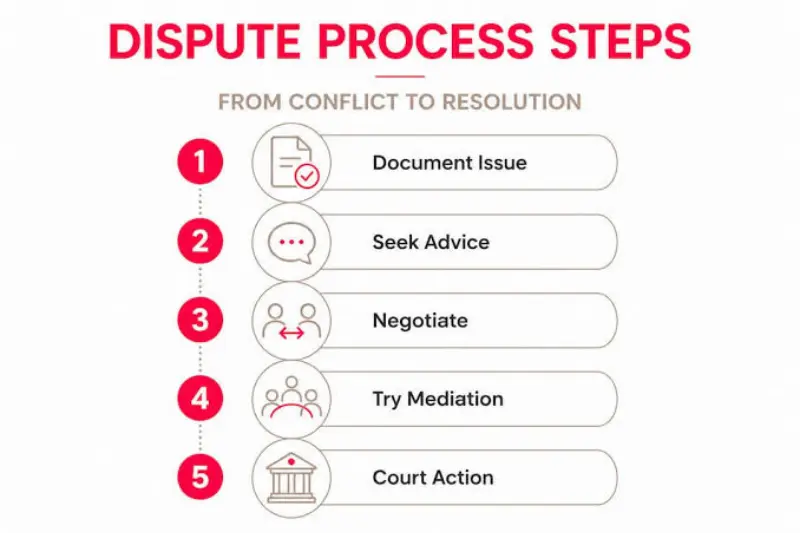
How Property Disputes Work: Key Steps
The general process may look like this:
Identify the Problem
Determine whether the dispute concerns ownership, boundaries, rent, access, damage, or another issue.
Collect Evidence
Gather documents, photographs, records, contracts, and other relevant information.
Review Legal Rights
Determine what the applicable law and property documents say.
Communicate
Try to discuss the issue calmly with the other party.
Consider Mediation
A neutral mediator may help the parties reach an agreement.
Consider Legal Action
If the dispute cannot be resolved, formal legal proceedings may be appropriate.
Follow the Court Process
If a case is filed, follow all required procedures and deadlines.
Frequently Asked Questions
How do property disputes work?
How property disputes work generally involves identifying the disagreement, collecting evidence, reviewing property documents, negotiating with the other party, considering mediation, and pursuing court proceedings if necessary.
What are the most common property disputes?
Common property disputes include boundary disagreements, ownership conflicts, landlord-tenant disputes, easement issues, inheritance conflicts, co-owner disagreements, and property damage claims.
Can a property dispute be resolved without going to court?
Yes. Negotiation, mediation, and arbitration may provide alternatives to court proceedings, depending on the circumstances and applicable law.
What documents are important in a property dispute?
Common property disputes include boundary disagreements, ownership conflicts, landlord-tenant disputes, easement issues, inheritance conflicts, co-owner disagreements, and property damage claims.
Can a property dispute be resolved without going to court?
Yes. Negotiation, mediation, and arbitration may provide alternatives to court proceedings, depending on the circumstances and applicable law.
Conclusion
Understanding how property disputes work can help property owners, tenants, buyers, sellers, landlords, and neighbors deal with disagreements more carefully.
Property disputes can involve boundaries, ownership, leases, easements, inheritance, co-ownership, property damage, and contracts. The first step is usually to identify the actual legal issue and gather the documents and evidence connected to it.
Not every property dispute needs to go to court. Negotiation and mediation can sometimes provide faster and less expensive solutions. However, serious disputes may require formal legal proceedings and a court decision.
The most important point about how property disputes work is that property rights can depend on documents, contracts, official records, and local laws. Assuming that a property belongs to someone or that a boundary is correct without checking the relevant records can lead to unnecessary problems.
Because property laws differ between jurisdictions, anyone involved in a significant property dispute should consider consulting a qualified property lawyer. Professional advice can help explain legal rights, available remedies, and the best way to proceed.